Creating a marketing calendar doesn’t have to be complicated. It’s about organizing your marketing efforts so you can meet your goals effectively. Here’s what you need to do:
Key takeaway: A well-organized marketing calendar keeps your team focused, ensures campaigns are timely, and improves coordination. Start simple, review regularly, and adjust as needed to hit your goals.
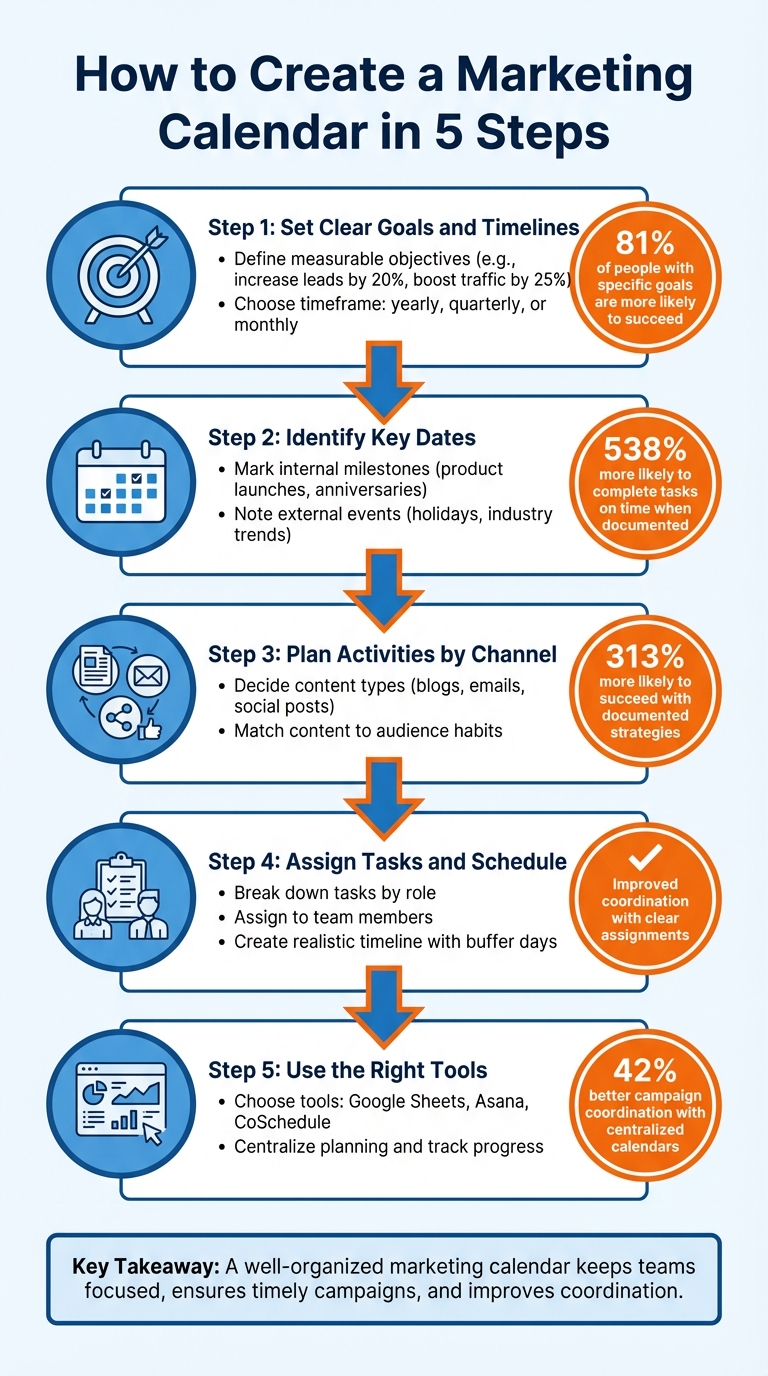
5-Step Marketing Calendar Creation Process
Before diving into scheduling tasks, it’s essential to define your goals and the timeframe for achieving them. Without clear objectives, your marketing calendar can easily turn into a simple to-do list instead of a strategic tool that drives meaningful results. Start by breaking your goals into measurable targets and setting a realistic timeline.
Your marketing goals should directly support your broader business objectives. Instead of vague statements like "improve our brand", aim for specific, measurable targets. For instance, you could focus on increasing brand awareness by a certain percentage, driving a specific number of website visitors, generating a set number of leads, or achieving a clear sales target.
To track progress, anchor each goal with clear KPIs. For example, you might set targets like "generate 500 qualified leads in Q1" or "increase website traffic by 25% by June 30, 2026". Having precise numbers allows you to measure the success of your efforts. In fact, 81% of people with specific goals are more likely to succeed.
Prioritize initiatives using a framework like the "10x versus 10%" approach. This means focusing on strategies that could deliver a tenfold impact rather than spreading resources on efforts that might only yield marginal gains. This approach ensures your time and energy are directed toward high-impact activities.
Once your goals are set, decide on a planning period that aligns with them. A full-year calendar works well for long-term coordination and budgeting. It’s also ideal for planning around major holidays – think of starting Black Friday or Christmas campaigns as early as August. On the other hand, a quarterly calendar offers a balance, giving you the flexibility to review and adjust your strategy four times a year. If you need maximum adaptability, a monthly calendar allows you to respond quickly to trends and market changes.
"Cadence is also important to consider when establishing a marketing calendar. If you’re a B2B company that typically has multiyear client contracts in place, communicating with clients monthly or even quarterly might be the best strategy." – Elaine Chen, Founder, Excogita
Many teams use a hybrid approach: they map out major milestones for the entire year while planning the finer details for each quarter and month. No matter which timeframe you choose, build in buffer days before deadlines to handle revisions, unexpected delays, or shifting priorities.
Once you’ve set your goals and timeline, the next step is pinpointing the key dates that will shape your marketing efforts. These include both internal business milestones and external events that influence customer behavior. Overlooking important dates can lead to missed opportunities, while planning around them positions your campaigns for greater success. Align these dates with your objectives to ensure every milestone strengthens your overall strategy.
Start by identifying dates unique to your company. Product and service launches are especially important, as they demand coordinated promotions across multiple channels. For example, HubSpot’s April 2024 "Spotlight" launch featured a well-orchestrated mix of videos, emails, and social media campaigns to maximize visibility and engagement.
Company milestones, such as anniversaries or major announcements, are equally valuable. Consider how Redner’s Warehouse Markets celebrated their 50th anniversary by sending daily emails to loyal customers, each featuring a "special deal of the day" on select food items. These milestones not only engage your audience but also reinforce your brand’s credibility.
Other dates to include are sales events (like flash sales or seasonal discounts), newsletter or blog publication schedules, and internal deadlines for tasks like content reviews and approvals. Collaborate with your product, sales, and partnership teams to ensure no major milestone is overlooked, and be sure to flag any dependencies that could impact timelines.
Once you’ve mapped out your internal milestones, shift your attention to external events that influence consumer behavior.
External dates play a significant role in shaping buyer behavior, making them essential for planning. Major holidays like Thanksgiving, Christmas, and Hanukkah require early preparation. For instance, Black Friday and Cyber Monday campaigns often need to be planned as early as August to handle the surge in customer activity. Seasonal trends are just as critical – think about how a sporting goods store might promote baseball gear leading up to spring or football equipment ahead of fall.
In addition to major holidays, consider incorporating niche dates that align with your brand or audience. Events like International Women’s Day, Earth Day, or National Cybersecurity Awareness Month (ideal for tech companies) can provide fresh content opportunities. B2C brands often focus on seasonal themes like back-to-school shopping, while B2B brands might prioritize industry-specific challenges or conferences.
Document your 12-month sales cycle to account for product seasonality and coordinate marketing efforts during peak demand periods. Research shows that marketers who proactively document their strategies are 538% more likely to complete tasks on time. Build in buffer time for unexpected delays or revisions – having a few extra days before deadlines can make a big difference in hitting your goals.
This is where your calendar evolves from a simple list of dates into a well-thought-out action plan. Deciding what to create and where to share it ensures your message reaches the right audience at the right time. Start by developing content ideas that align with your goals.
Begin by brainstorming themes that support your objectives and resonate with your audience. Keyword research can help uncover topics people care about. Tools like Semrush, Ahrefs, or Google Trends are great for this. For instance, a B2B software company might focus on keywords like "digital transformation" or "future of work" to guide its content.
It’s also smart to collaborate with sales and product teams early in the process. Their insights can help ensure your marketing aligns with product launches and sales cycles. Fun fact: marketers who document their strategies are 313% more likely to succeed. To keep everything organized, create a content backlog – a central repository (like a spreadsheet or Trello board) to store ideas and prioritize them. Using frameworks like the "10x vs. 10%" approach can help you focus on ideas with the highest potential impact.
Don’t forget to keep an eye on your competitors. See what’s working for them, spot content gaps, and think about how your perspective can fill those gaps. For B2C brands, timing content around holidays or cultural moments can be effective. Meanwhile, B2B brands might focus on addressing industry challenges or creating thought leadership pieces.
Once you’ve nailed down your content ideas, it’s time to pair them with the channels that will deliver the best results. Think about your audience’s demographics and habits – what platforms do they use, and how do they interact with content? For example, a professional services firm might focus on LinkedIn for thought leadership, while a fashion retailer could prioritize Instagram and TikTok for visually engaging posts.
Each platform has its strengths, so tailor your content formats accordingly. LinkedIn works well for detailed case studies and industry insights, while Instagram thrives on quick, visually appealing updates. Email is perfect for direct promotions and customer retention, and blogs are excellent for driving organic traffic through SEO. Consider your business model, too. As Elaine Chen, Founder of Excogita, explains:
"If you’re a B2B company that typically has multiyear client contracts in place, communicating with clients monthly or even quarterly might be the best strategy. But if you have a product that could be purchased at any time, you’ll want to communicate far more frequently".
To allocate resources effectively, use a tiered approach. Major campaigns, like product launches (Tier 1), should span multiple channels – email, social media, blog posts, and paid ads. Smaller efforts, like a minor holiday promotion (Tier 4), might only need a quick social media post. This strategy helps avoid burnout while ensuring your top campaigns get the attention they deserve. Teams using centralized calendars report 42% better campaign coordination and 38% faster launches for new initiatives.
Here’s a quick guide to matching content formats with channel goals:
| Channel Type | Best Content Formats | Primary Goal |
|---|---|---|
| Blog/Editorial | How-to guides, case studies, articles | SEO, thought leadership, organic traffic |
| Social Media | Short videos, images, stories | Engagement, brand awareness, community |
| Newsletters, promotions, drip campaigns | Customer retention, direct conversions | |
| Paid Ads | Search ads, display banners | Lead generation, targeted sales |
| Events/Webinars | Live video, Q&A sessions, workshops | Deep engagement, lead nurturing, networking |
Finally, schedule your content to fit your audience’s routines. For working professionals, aim for posts during lunch breaks or after work. If students are your target, focus on weekends or school holidays. Establish a regular cadence – like posting podcasts every Tuesday or blogs every Thursday – to build consistency and keep your audience engaged.
Now that you’ve planned your content and chosen your channels in Step 3, it’s time to bring your strategy to life. This step is all about turning ideas into action by organizing tasks and creating a schedule that your team can follow. A well-structured schedule ensures smooth execution and keeps everyone accountable.
Start by matching tasks with the right people based on their strengths and expertise. For instance, let your SEO specialist handle keyword research, assign writers to draft content, have editors polish the copy, and rely on designers for visuals. For a blog post, break it down into smaller tasks like research, drafting, editing, creating images, and reviews. Each task should have a clear owner responsible for completing it and moving it forward. To keep everything on track, appoint a calendar owner or project manager. This person will oversee the schedule, monitor deadlines, balance workloads, and ensure no team member feels overwhelmed.
Use a shared calendar as your central hub. This keeps everyone aligned by showing task dependencies, deadlines, and how each piece fits into the bigger picture. It also reduces the risk of miscommunication. Before assigning new tasks, check your team’s current workload to avoid burnout. Label tasks with clear statuses like "Open", "In Progress", "In Review", or "Completed." Fun fact: marketers who document their strategies in this way are 538% more likely to finish tasks on time.
Once roles are sorted, create a timeline that matches the complexity of your workflow.
A realistic schedule goes beyond setting a final deadline. It maps out every step of the process, from drafting to reviews and approvals. Use past project data to estimate how long tasks will take, and make sure your timeline reflects this.
Start by adding key dates to your calendar – think holidays, product launches, or industry events. These "anchor dates" provide structure for your content plan. Next, schedule recurring content with standard cycles and allocate time for each phase, including writing, revisions, and design. Don’t forget to build in buffer days for unexpected delays or extra edits.
The planning timeframe you choose should suit your business needs. For example, annual planning works well for seasonal campaigns, while quarterly planning allows for regular performance reviews and adjustments. As Elaine Chen, Founder of Excogita, wisely points out:
"Balancing your strategic goals and available resources will be essential to creating a successful marketing calendar".
Avoid planning too far ahead. A detailed two-week or monthly plan is often more practical than trying to map out six months, which can quickly become outdated. Focus on staying flexible while keeping your team on track.
Now that you’ve outlined your tasks and timeline in Step 4, it’s time to bring everything together with the right tools. These tools will serve as your team’s central hub, aligning schedules and roles while keeping everyone on the same page.
The tools you choose should fit your team’s size, budget, and workflow needs. Here are a few options to consider:
Did you know that 73% of high-performing teams rely on structured planning tools? Centralized calendars can improve coordination by 42% and even speed up time-to-market by 38%. Look for tools that integrate with platforms like Slack or Microsoft Teams to streamline communication. For example, Fiorella Rollins from Joovy shares that CoSchedule has been invaluable in simplifying marketing workflows and improving visibility.
Once you’ve chosen your tool, it’s time to fill your calendar with essential details. Every campaign entry should include:
To make your calendar even more effective, use color-coding – assign blue for blogs, green for social media, and orange for email campaigns, for instance. Add custom tags to group campaigns by type or goal and build in buffer days before deadlines to handle any unexpected delays. This level of detail ensures everyone stays informed and aligned, turning your calendar into the ultimate reference point for all marketing activities.
Once your tasks are scheduled and your calendar is filled out, keeping it running smoothly requires ongoing effort. A marketing calendar isn’t a set-it-and-forget-it tool – it’s a living document that needs regular attention to stay relevant and useful.
To keep your marketing efforts on track, make it a habit to review your calendar often. Check it daily to update task statuses and handle immediate priorities. Weekly reviews can help keep your team aligned, while monthly adjustments allow you to adapt to any emerging trends or unexpected shifts. On a quarterly basis, take a deeper dive – assess campaign performance, refine your strategies, and plan for the next three months based on what’s working and what isn’t.
Pay attention to what’s driving results and what’s not. If a campaign isn’t delivering, shift your resources to something that is. Focus on key metrics like conversion rates, customer acquisition costs, and marketing-attributed revenue for campaigns targeting the bottom of the funnel. For top-of-funnel efforts, keep an eye on website traffic and lead generation metrics. Interestingly, only 23% of marketers feel confident that they’re tracking the right KPIs, so make sure you’re measuring metrics tied to real business goals – not vanity metrics like follower counts.
To improve team visibility and efficiency, use status labels such as "Open", "In Progress", "In Review", and "Completed." These can help everyone stay informed about where tasks stand at any given moment.
Once you’ve established a rhythm for reviewing and refining your calendar, you might find professional support helpful for taking your marketing efforts to the next level.
Managing a marketing calendar while running campaigns can stretch your team thin. That’s where professional support can make a big difference. Experts can help optimize your calendar, ensuring every activity aligns with your business goals and frees up your team to focus on strategy and analysis.
Agencies bring specialized knowledge to the table, helping you choose the best channels for your audience – whether it’s PPC, email marketing, content creation, or social media. For instance, Blue Aspen Marketing offers services tailored to your calendar goals, such as crafting high-performing content for your editorial schedule, launching email campaigns timed to your promotions, and building SEO strategies to strengthen your long-term visibility. With professionals handling everything from research and writing to design and publication, your team can dedicate more time to big-picture planning and performance reviews.
Teams that combine a centralized calendar with professional support often see real benefits: 42% better campaign coordination and a 38% faster time-to-market for new initiatives. With expert help, you can ensure your marketing calendar isn’t just a tool for organization – it becomes a driver of meaningful results.
Creating a marketing calendar becomes straightforward when you break it down into five essential steps: setting clear goals, identifying key dates, planning aligned activities, delegating tasks effectively, and choosing the right tools. Research shows that teams who plan ahead are three times more likely to achieve their objectives. A well-thought-out calendar isn’t just about staying organized – it’s a powerful tool for delivering measurable outcomes. It provides a clear roadmap that empowers you to take action with confidence.
Take these strategies and start crafting a marketing calendar that works for you. Begin with something simple, like Google Sheets, and scale up to more advanced tools as your needs grow. Start by outlining your major milestones, then fill in the details for the next quarter. Don’t forget to allow extra time for revisions and unexpected changes, and make it a habit to review and update your calendar regularly to stay on track.
If you’re looking to elevate your results, professional support can make a big difference. Blue Aspen Marketing offers tailored services to complement every stage of your calendar, from content creation and email campaigns to SEO strategies and PPC management. With expert help, your marketing calendar evolves into more than just a planning tool – it becomes a catalyst for growth and a competitive edge for your business.
The ’10x vs. 10%’ method is all about focusing your efforts on ideas that can create massive growth (10x) rather than settling for small, incremental improvements (10%). The process starts with listing all your marketing ideas in a spreadsheet or similar tool. Then, evaluate each idea based on its potential impact – does it have the ability to significantly grow your business (10x), or will it only bring minor gains (10%)? To make this assessment, consider factors like revenue potential, audience reach, and cost, and assign a score accordingly.
Once you’ve scored your ideas, allocate your resources – budget, time, and talent – toward those high-impact 10x opportunities. At the same time, set aside a smaller portion of your resources for 10% tweaks or experimental ideas. The key is to regularly review your outcomes, refining your approach as you go. If a smaller idea proves successful, you can scale it into a larger initiative. This method, used by companies like Blue Aspen Marketing, helps businesses amplify their marketing efforts and achieve meaningful growth.
For small teams aiming to simplify their marketing efforts, a few tools can make managing calendars much easier. CoSchedule is a comprehensive marketing calendar that brings campaigns, deadlines, and assets together in one place, making teamwork smoother. Airtable offers a customizable workspace where teams can design visual calendars and connect tasks to campaigns for improved organization. If you’re looking for a straightforward and budget-friendly option, Google Sheets or Excel paired with adaptable templates can do the job. To save time, tools like Zapier can automate updates and reminders, keeping your calendar current with minimal manual input. These tools are great for helping small teams stay on track, hit deadlines, and run campaigns efficiently.
To keep your marketing calendar working smoothly, it’s important to review and update it regularly. There’s no universal schedule that works for everyone, but many businesses benefit from doing reviews weekly, monthly, or quarterly, depending on their goals and how they operate.
Regular check-ins help you stay on top of market shifts, measure progress, and adjust your strategies when needed. By setting a review schedule that fits your team’s workflow, you’ll stay organized and keep your marketing efforts aligned with your objectives.


 Physical Therapy
 MedSpa
 Dental
 HVAC
HVAC Roofing
 Pest Control
 Cleaning Services
 Landscaping
 Hotel
Hotel Cruise
 Branding
 Content Marketing
 Email Marketing
 Graphic Design
 PPC (Online Ads)
 SEO (Search Engine Optimization)
 Website Design and Development
 Pest Control
 Plastic Surgeon
 Roofing